 Kuvo Code
Reviewing changes
See what changed in the project like a pull request, and comment on lines for the agent.
The Changes tab shows what’s changed in the project, straight from git, the way a pull request does: the agent’s edits and yours. Open it with ⌥ ⌘ I.
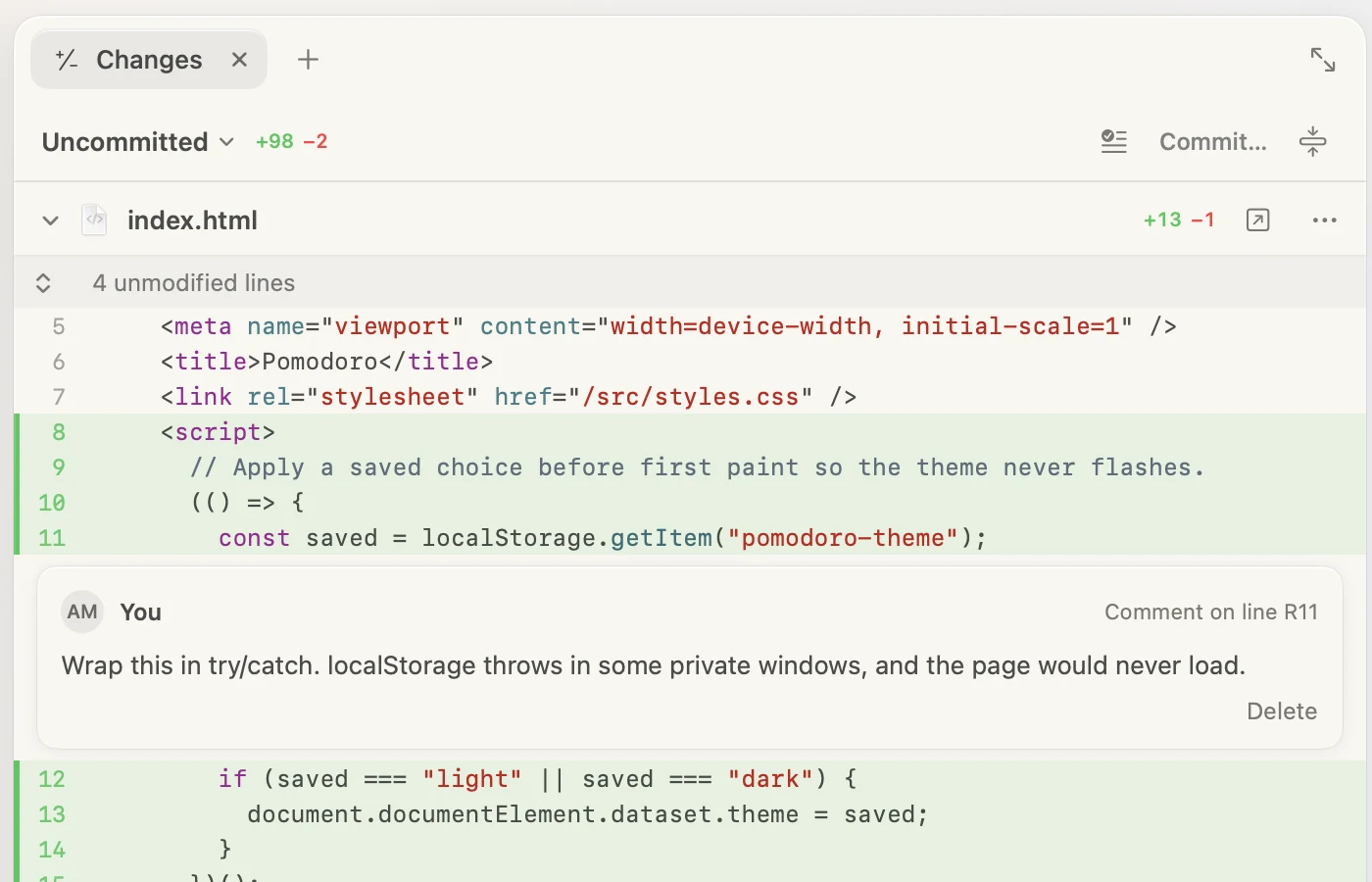
The menu at the top chooses Uncommitted (the default), Unstaged or Staged changes. On a branch other than the main one, Since main shows everything the branch changed, committed or not. This Session shows only what this session’s agent changed, even when you or other sessions changed the same files. Outside a git repository, the tab shows the files the agent edited in this session instead. In a project with several folders, the folder menu next to it picks which folder’s changes to show. Commit… commits what’s staged, or all the changes shown when nothing is, and can push afterwards. Suggest a Message there has the session’s model write the message for you. The checkmark button has the agent review what the tab shows, with the /review command.
Pull requests and merging
On a branch other than the main one, the branch button next to Commit… has Create Pull Request: it pushes the branch and opens the pull request page on GitHub or GitLab, with a title and description the session’s model wrote from the branch’s commits and changes, for you to check before you create it.
A session with its own worktree opens the tab on Since main, and its branch button can also Merge into main, into your project’s folder; once it’s merged, Archive Session and Remove Worktree tidies up. Both take only what’s committed. A merge that would conflict changes nothing; Ask the Agent to Fix It has the agent merge main into its branch and resolve the conflicts first.
Reading the changes
Each file has a header with its path and how many lines it adds and removes; click it to fold the file away. Unchanged lines are folded too; click a fold to see them. New files show up as new, and changed pictures show before and after. A file’s … menu can Stage or Unstage it, or Discard Changes… to put it back as it was; it asks first, and a new file goes to the Trash.
Commenting
- Hover a line’s number and click +.
- Type your comment and click Comment (⌘ Return).
Your comments go to the agent with your next message, each with the line it’s about, and show in the transcript as cards. The composer shows how many are waiting; click that to discard them.