 Kuvo
KuvoDocker for your Mac.
None of the weight.
Kuvo is a native macOS app that runs the real Docker engine in a small Linux VM. A 3 MB download, ready about three seconds after you open it.
Free and open source. macOS 15 or later, Apple silicon.
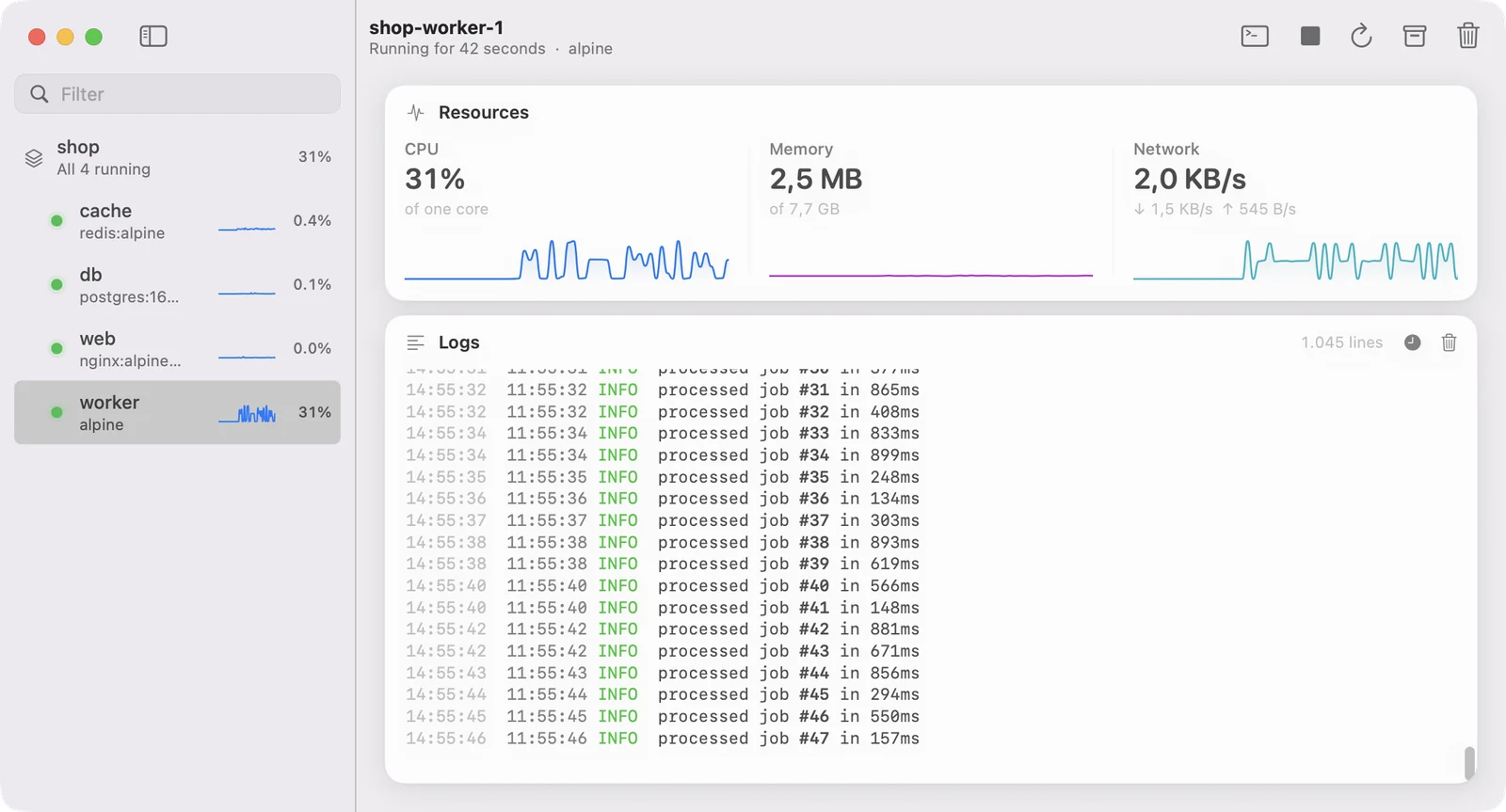
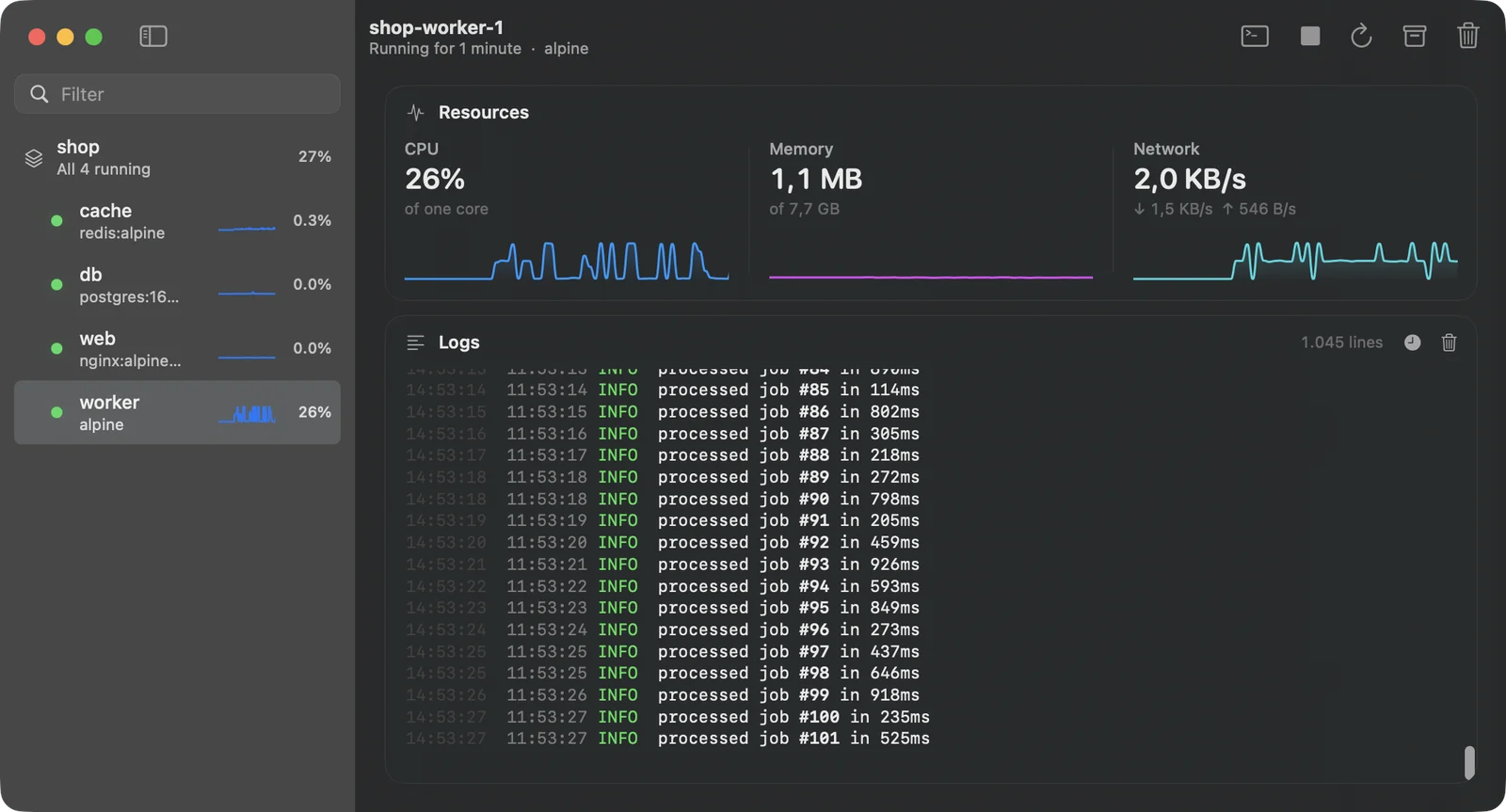
Everything running.
At a glance.
One window for your containers and Compose projects. It feels like a Mac app because it is one, and it stays quiet when you're not using it.
Projects stay together.
Compose services sit under their project. Start, stop or remove a whole stack at once, and take its volumes with it when you mean to.
Read the docs →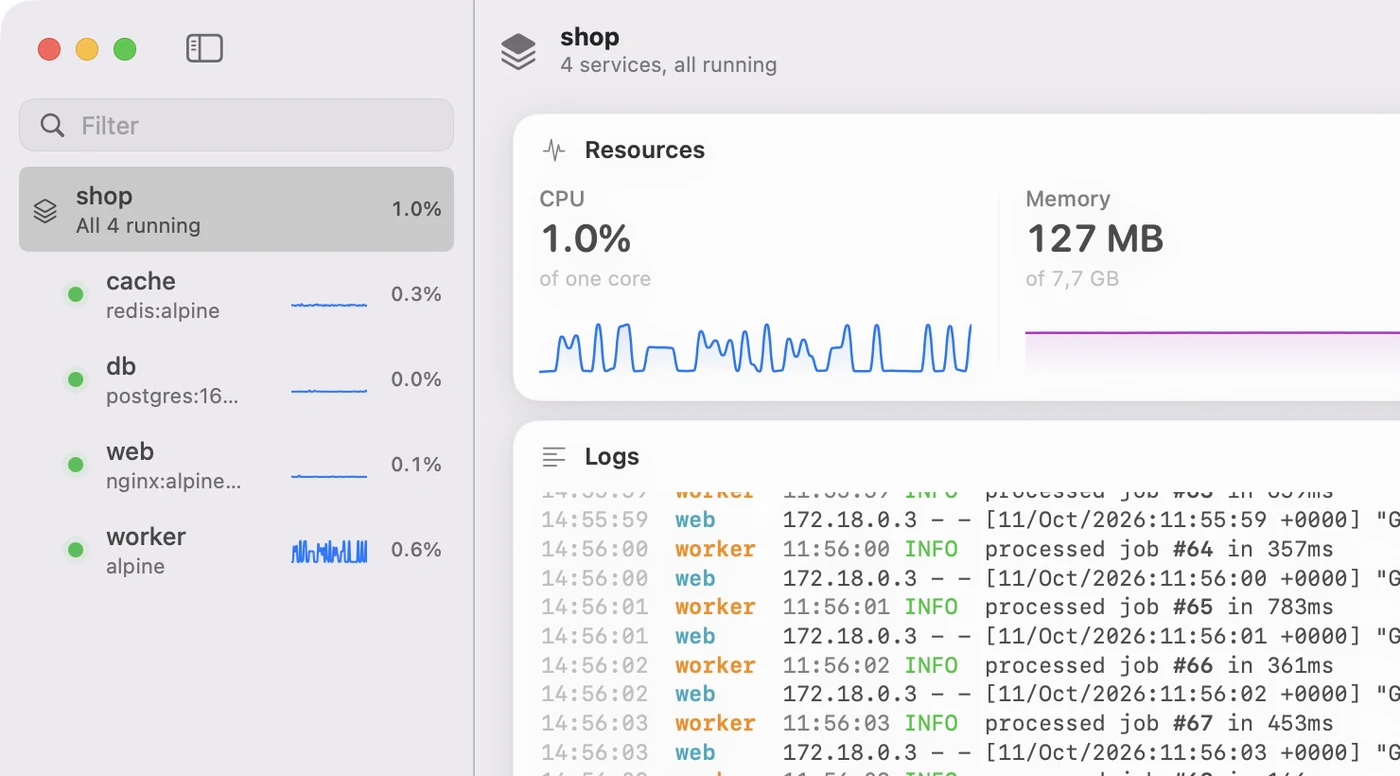
Live numbers. No cost when hidden.
CPU, memory and network update every second while you're looking. Close, minimize or cover the window and Kuvo stops collecting them.
Read the docs →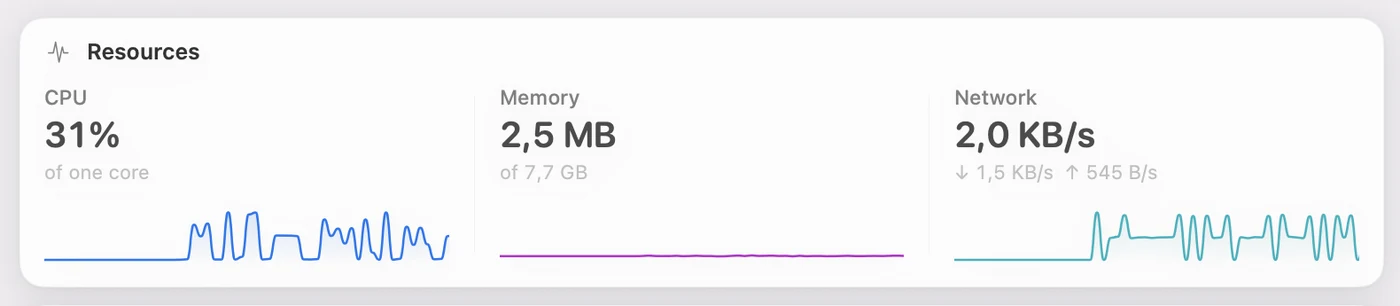
Every service, one stream.
Logs keep the colors your programs print. Select a Compose project and its services are merged in time order, each labeled in its own color.
Read the docs →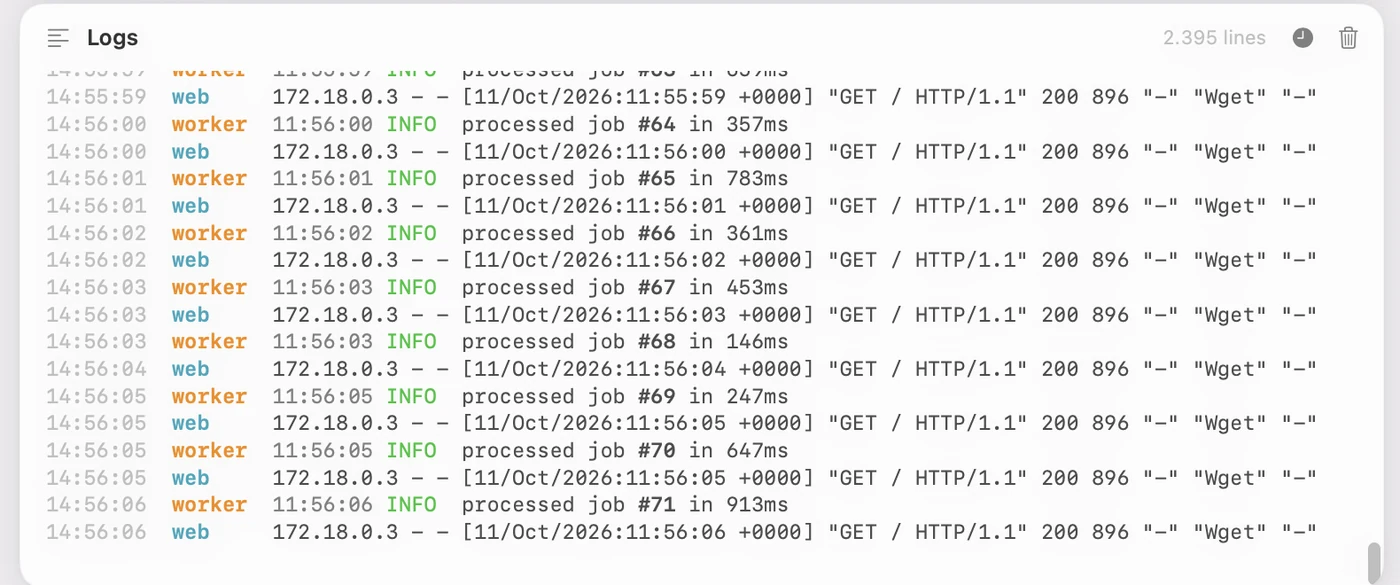
A shell in every container.
Press ⌃` for a terminal beside the logs. Prefer your own terminal app? Open the container there, or run kuvo shell.
Read the docs →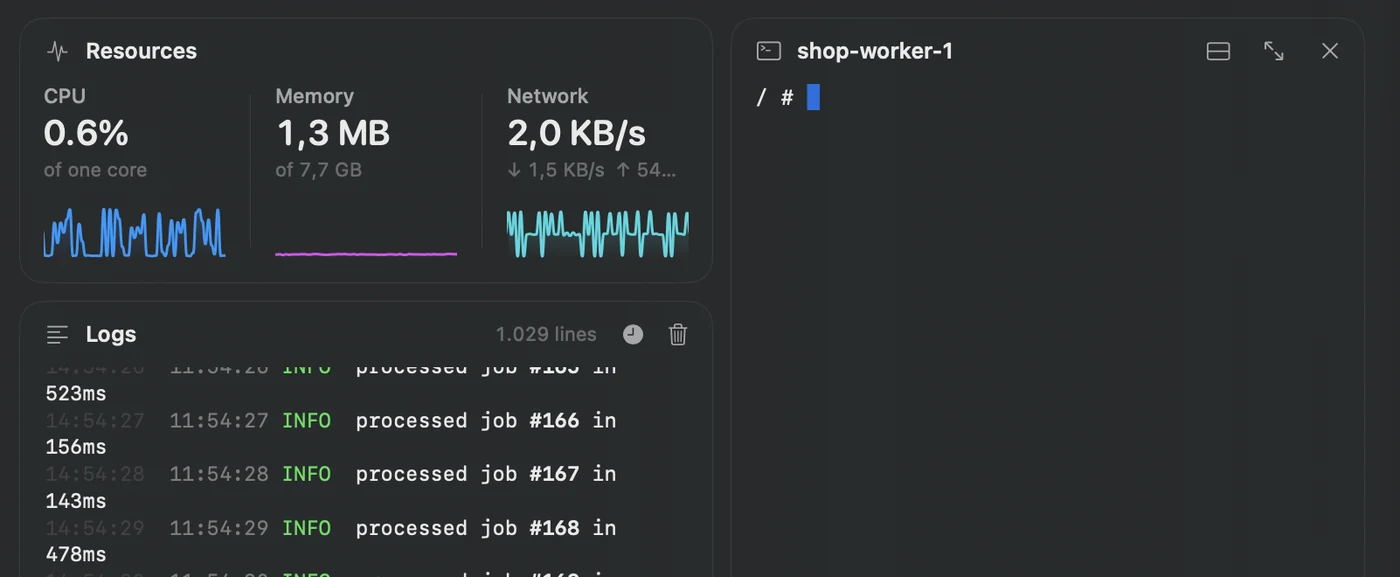
The engine you know.
The flags you know.
Kuvo doesn't change how you use Docker. It gives the docker command a fast, small engine to talk to, and an app to see what it's doing.
The real Docker Engine
dockerd from Alpine Linux, not a reimplementation. The docker CLI, Compose and your scripts work unchanged.
Ports on localhost
Published ports show up on 127.0.0.1 as soon as a container starts. Nothing to configure.
Bind mounts just work
/Users is shared at the same path inside the VM, so -v $PWD:/app means what you expect.
Intel images too
linux/amd64 images run through Rosetta at close to native speed on Apple silicon.
Menu bar
Every container one click away, with the window closed.
Archive
Stop a container and keep it for a while. Kuvo cleans it up after the period you choose.
Light and dark
Follows macOS, or pick one. Glass that picks up your wallpaper.
Made for agents
A CLI with plain output and real exit codes, so coding agents can work in a container instead of on your Mac.
A CLI that reads well.
For people and agents.
The kuvo command ships inside the app and lands on your PATH. Plain output and real exit codes let a coding agent create a container, copy code in and run it, without touching your Mac.
CLI reference →$ kuvo new bench --cpus 2 --memory 2g Created bench from ubuntu:24.04. Run commands with: kuvo exec bench <command> $ kuvo cp ~/code/parser bench Copied 214 files (1.8 MB) to bench:/workspace/parser. $ kuvo exec -w /workspace/parser bench "make test" ok parser 0.84s ok parser/ast 0.31s $ kuvo ls NAME IMAGE STATE CREATED BY bench ubuntu:24.04 running for 2 minutes Claude Code
Lighter than Docker Desktop.
Measured, not guessed.
Same Mac, the same three idle containers: nginx, redis and postgres. CPU is summed over every process each app runs, VM included.
| Kuvo 0.1 | Docker Desktop 4.85 | |
|---|---|---|
| App size, installed | 4.3 MB | 2.1 GB |
| Engine ready after launch | about 3 s | about 4.5 s |
| Idle CPU, window open | 5.2% | 8.9% |
| Memory, app and VM | 0.87 GB | 1.5 GB |
| Processes | 2 | 12 |
One machine, one afternoon. Your numbers will differ. How we measured
One download.
Then docker run.
Open Kuvo, wait a few seconds, and the docker command you already have talks to it.
Download for macOSmacOS 15 or later, Apple silicon.
Point docker at Kuvo.
Use an environment variable, or a Docker context if you switch between engines.
eval "$(kuvo env)"docker context create kuvo --docker host=unix://$HOME/.kuvo/docker.sockdocker context use kuvoDon't have the docker command? Install it without Docker Desktop →
Rather build it yourself? Build from source →